
Why AI-Generated Images Backfire on Small Businesses
A local restaurant recently posted an ad full of AI-generated food. The post got a lot of attention, just not the kind they wanted. Here’s what happened, why it happens to almost everyone who tries it, and what to do instead.
The Post
It looks great at first glance. Dark background, bold gold lettering, a grand “We Are Open” headline, and a spread of beautiful dishes: a rich curry, charred chicken, a loaded salad, a molten chocolate dessert. A downtown restaurant opened its doors and wanted the community to know.
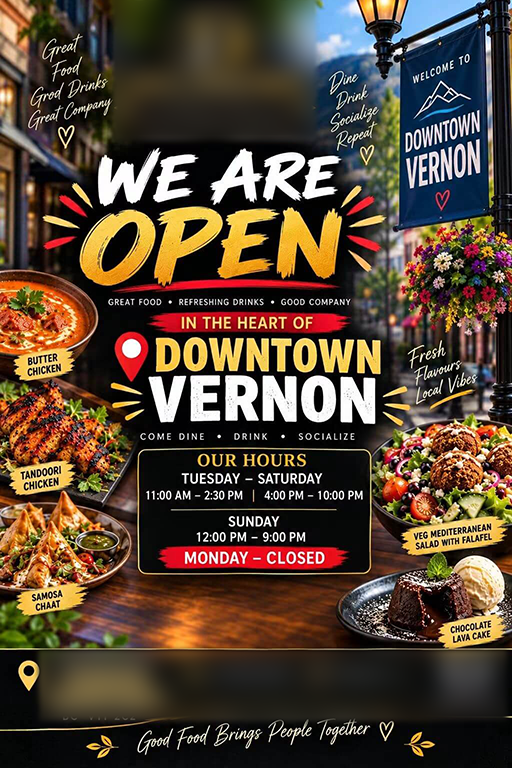
Then people zoomed in. The food is too glossy, the garnishes too perfect, the textures slightly wrong in the way AI images always are. And the comment section, which is where your customers actually talk, did what comment sections do.
What the Comments Said
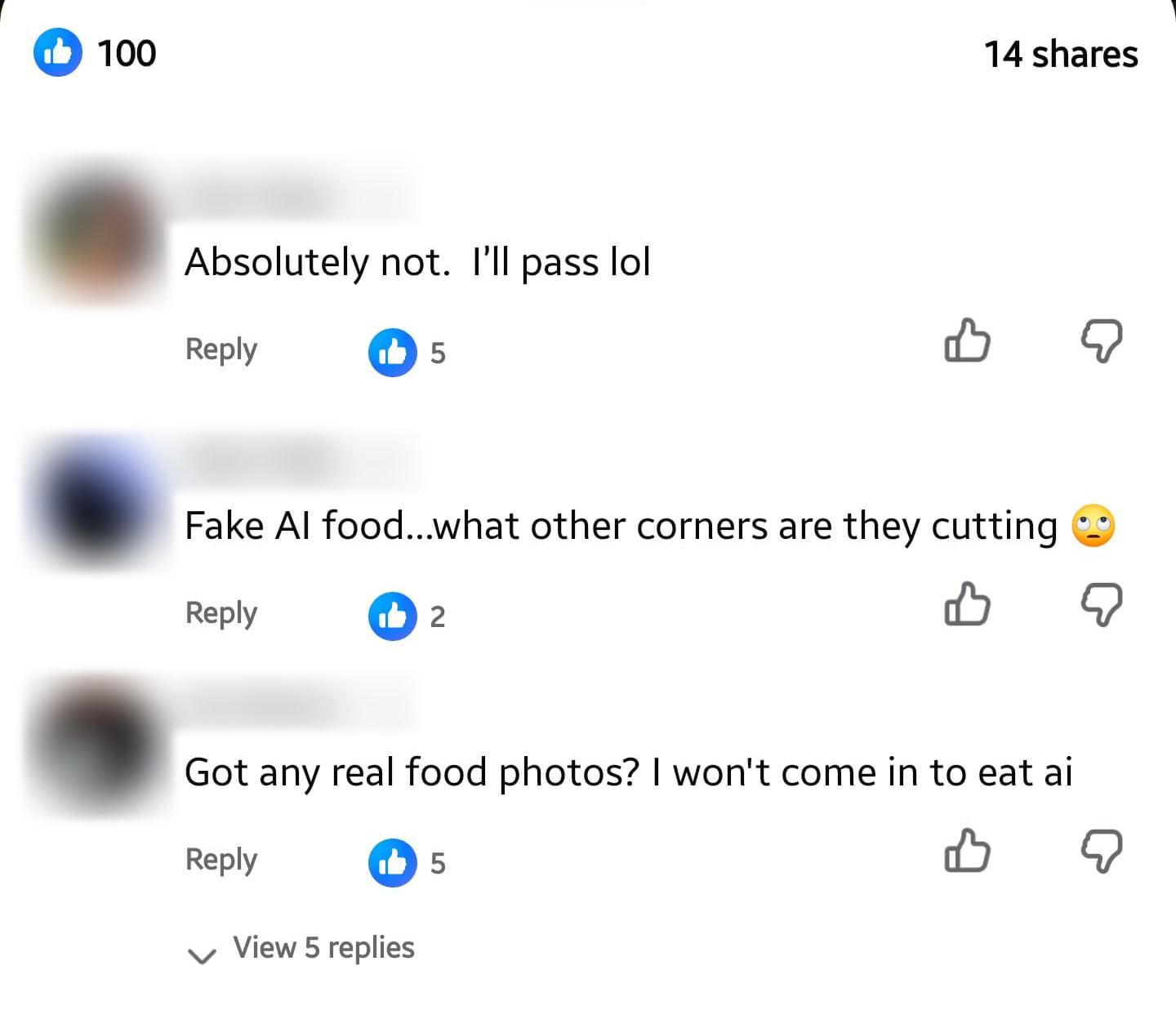
The post collected 100 reactions and 14 shares, which sounds like a win. Read what the people engaging with it were actually saying:
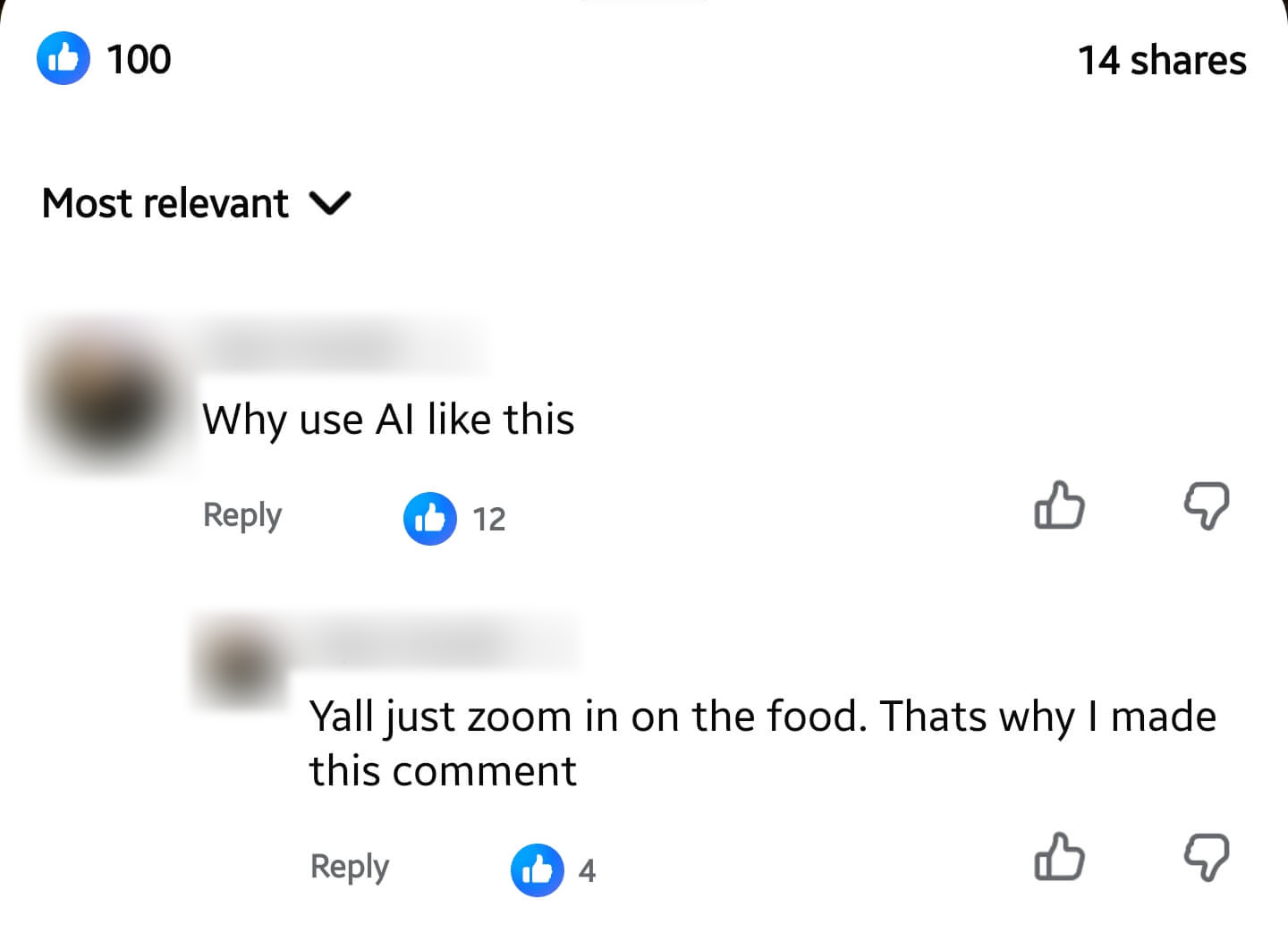
“Why use AI like this”
“Fake AI food… what other corners are they cutting?”
“Got any real food photos? I won’t come in to eat AI.”
“Absolutely not. I’ll pass lol”
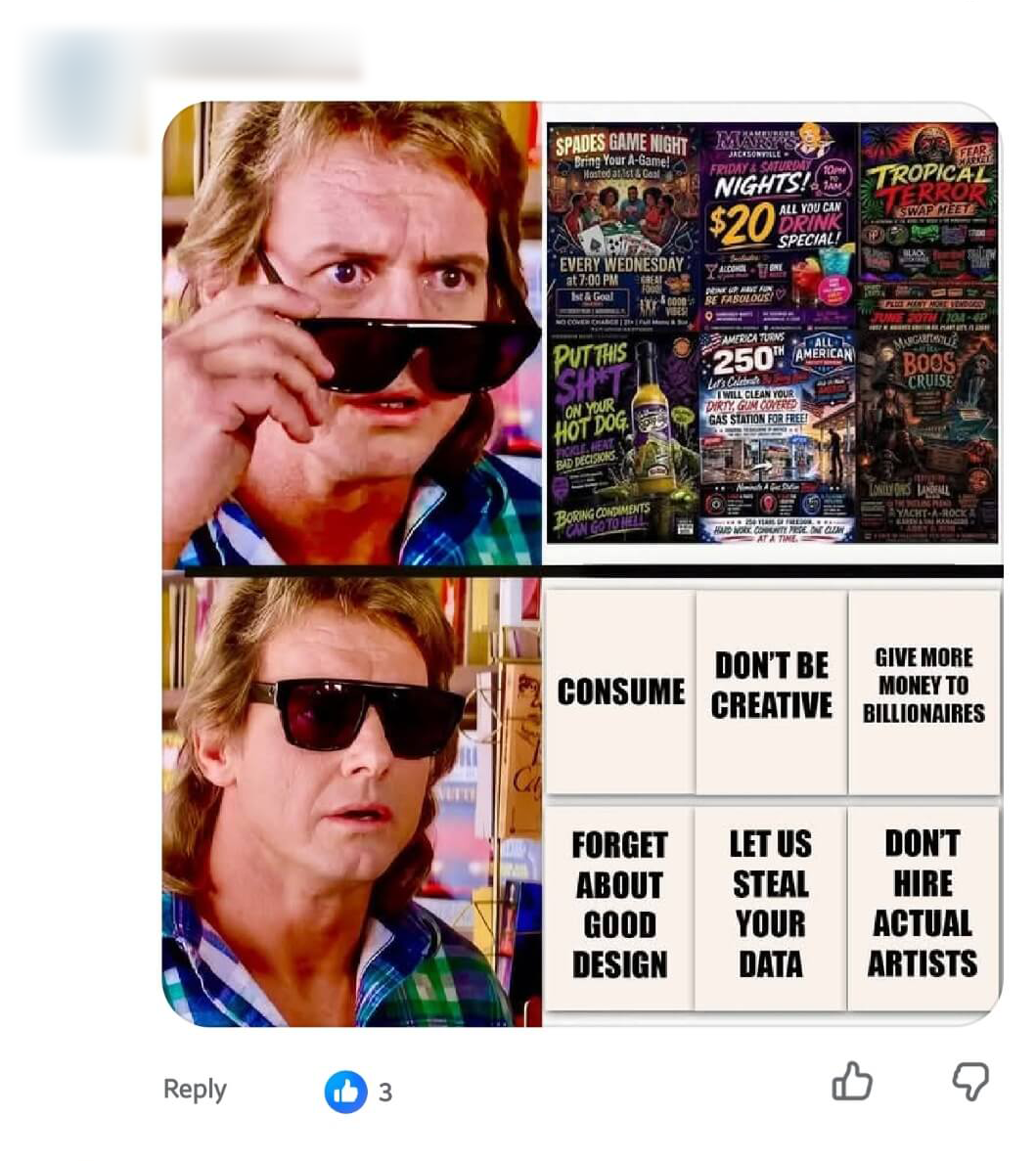
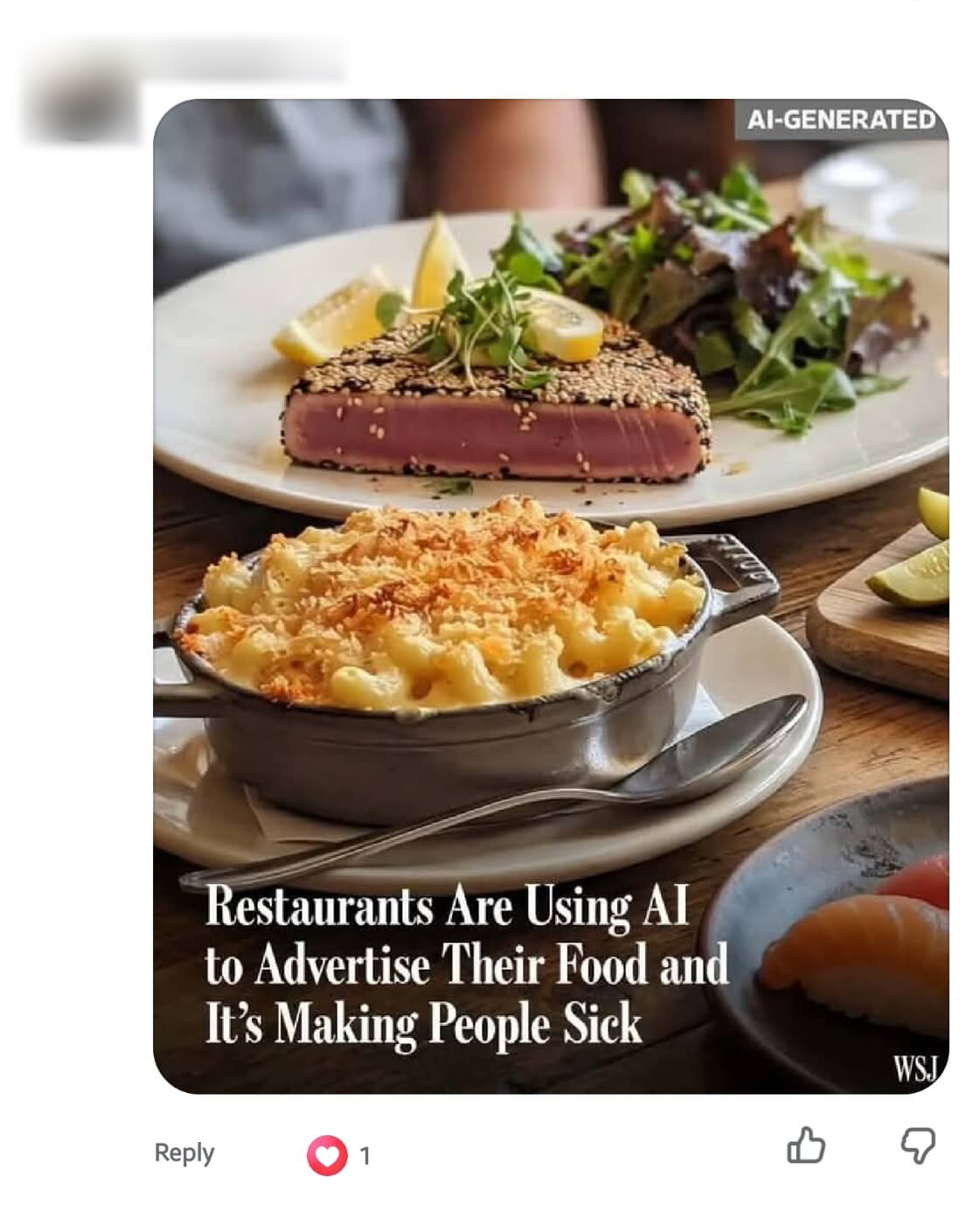
Page after page of it. One commenter posted a meme mocking the AI-heavy ads flooding local feeds. Another posted a mock news headline joking that restaurants advertising with AI food photos are making people sick. Meanwhile, the post’s own author was left replying to individual comments, at one point pointing out that the location was in the corner of the image.
Why Customers React This Way
Food is a promise
When you post a photo of a dish, you’re telling people what they’ll get. If the picture isn’t of your food, it isn’t a promise you can keep. People know it, and they don’t feel good about walking in to find something different from the picture.
It reads as a shortcut, and shortcuts read as character
The most telling comment in the thread was a question: what other corners are they cutting? Customers use small signals to judge big things. If the marketing looks faked, they assume the kitchen might be too.
Local business runs on trust, not polish
People choose a neighborhood restaurant, salon, or shop because it feels real. A face they recognize, a space they can picture, a person behind the counter. Generic AI imagery strips out the one thing small businesses have that big chains can’t fake.
People are tired of AI slop
Feeds are filling up with synthetic images, and audiences have gotten quick at spotting them. Platforms are even adding “AI-generated” labels to some content. Once people see the tell, the whole post gets filed under “low effort,” however good the offer is.
The useful information got lost
One of the most upvoted comments asked why a Facebook ad had no mention of an address. It did, in small print at the bottom of a busy image. Heavily produced graphics bury what customers actually need: where, when, and why.
What It Costs You
- ✓Attention that doesn't convert: Reactions and shares are not customers. A post can be seen by thousands and still make people less likely to come in.
- ✓Your comment section becomes the story: Anyone who sees the post sees the criticism right beside it, and the algorithm happily shows it to more people because it's driving engagement.
- ✓Damage to your reputation: A reputation for cutting corners is much easier to earn than to shake, and it follows you into reviews and word of mouth.
- ✓Lost real-world proof: Every AI image is a slot where a real photo of your food, your team, or your customers could have been building trust.
What to Post Instead
The good news is that the alternative is cheaper, faster, and works better. You don’t need a studio. You need real moments from your real business.
- ✓Real photos, even imperfect ones: A phone photo of today's special in natural light beats a flawless fake. Customers can tell the difference, and they prefer the one that's true.
- ✓The people behind the business: Your team, your hands at work, the regulars. This is what makes people choose you over a chain.
- ✓Customer stories and reviews: What your customers say about you is more persuasive than anything you can say yourself.
- ✓Clear, useful information: Put the address, hours, and what you're offering in the caption, in plain text, where people can find it.
For more on why real content wins, read our guide to user-generated content and our organic reach playbook.
Where Easeably Draws the Line
Easeably is built around this exact lesson. We don’t generate fake photos of your food, your space, or your team. Ever.
What we do is the part that’s a genuine chore for a busy owner: writing captions in your voice, picking the right time to post, and keeping you consistent across platforms. When a post needs a picture, Easeably matches it to a real photo from your own gallery, so what customers see is what they get. Nothing goes out without your approval.
AI should take the busywork off your plate. It shouldn’t be the thing customers are laughing at in your comments.
Frequently Asked Questions
Are AI-generated images always bad for business?
Not every use is a problem. A clearly stylized illustration or a graphic that doesn’t pretend to be real is a different thing. The backlash is aimed at AI images that stand in for real photos of your products, especially food, where the picture is a promise about what the customer will receive.
Why do people dislike AI food photos so much?
Because they’re misleading, and because they look generic. Customers want to know what they’re actually going to be served, and many read fake imagery as a sign of a business that cuts corners elsewhere too.
What should a small business post instead of AI images?
Real photos from your real business, even if they’re taken on a phone: your food or products, your team, your space, and your customers (with permission). Pair them with a clear caption that includes where you are and when you’re open.
Does Easeably use AI-generated images?
No. Easeably uses AI to write captions and plan your posting schedule, and it pairs posts with real photos from your own gallery. It doesn’t invent photos of your products, and you approve every post before it goes out.